























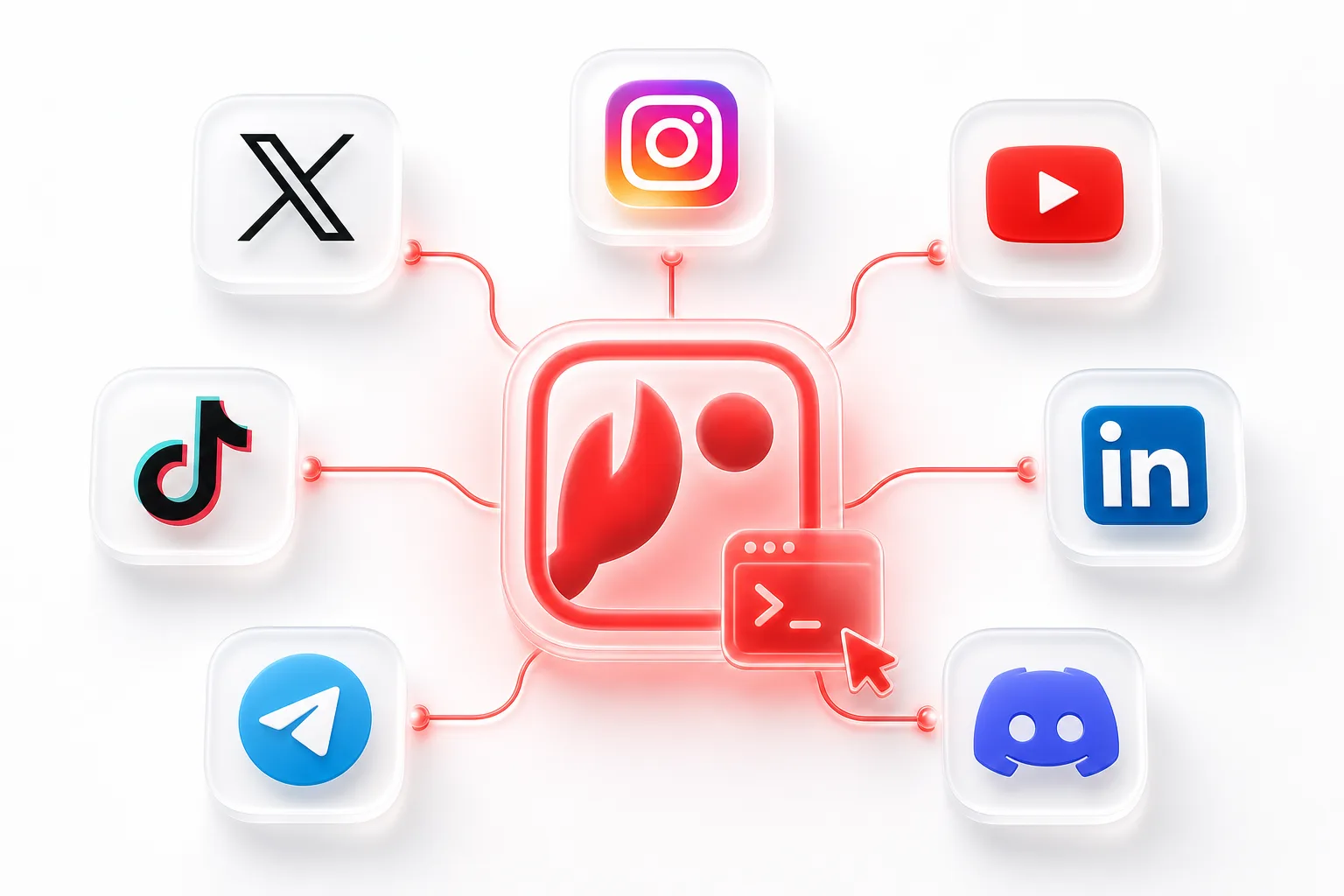
OpenClaw-compatible agents are good at planning.
They can:
- research launches
- draft threads and announcements
- summarize release notes
- adapt one piece of content for multiple channels
But planning is not the same thing as publishing.
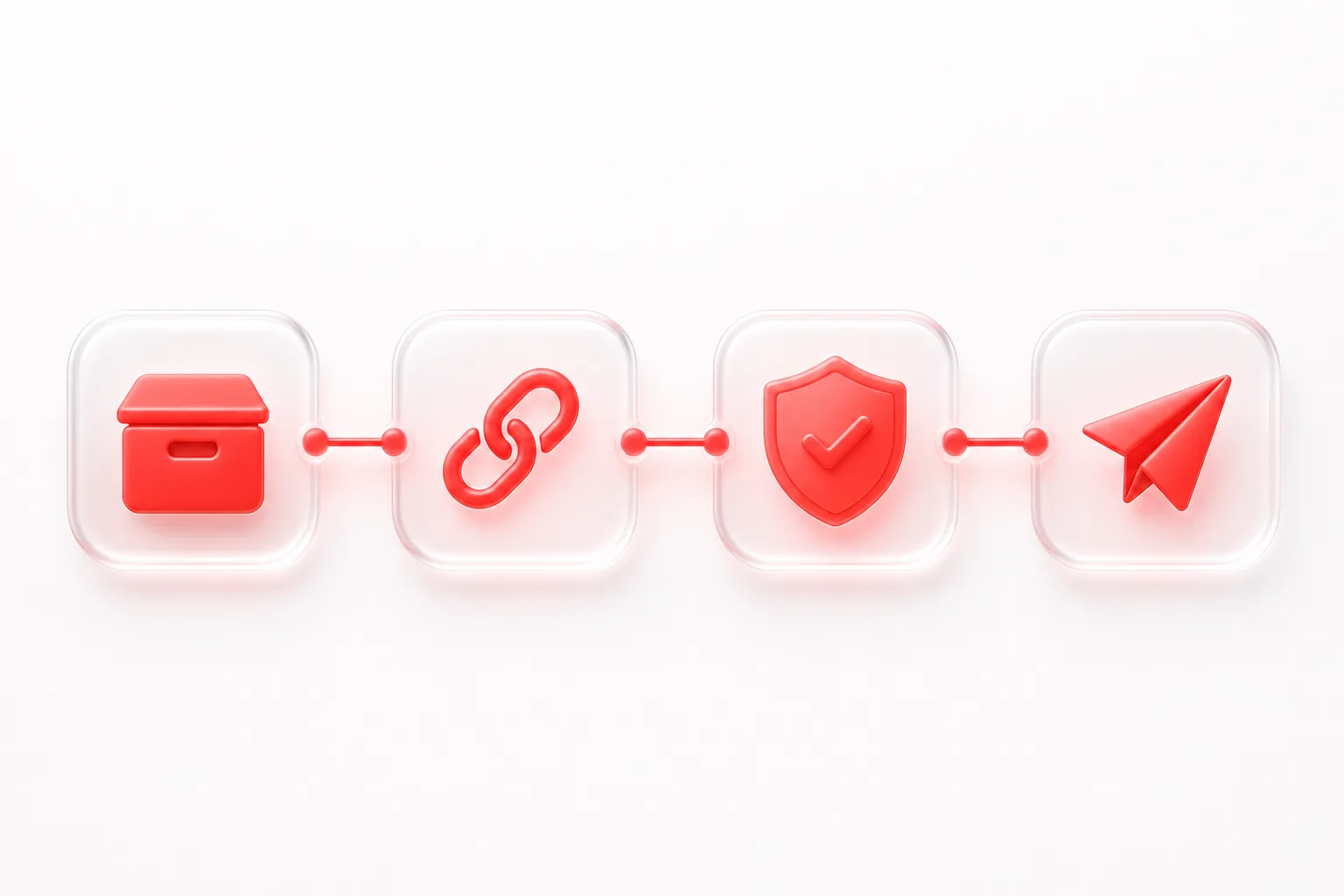
To publish reliably, the workflow still needs:
- connected social accounts
- workspace auth
- media upload
- provider-aware validation
- publish execution
- inspectable state after the run
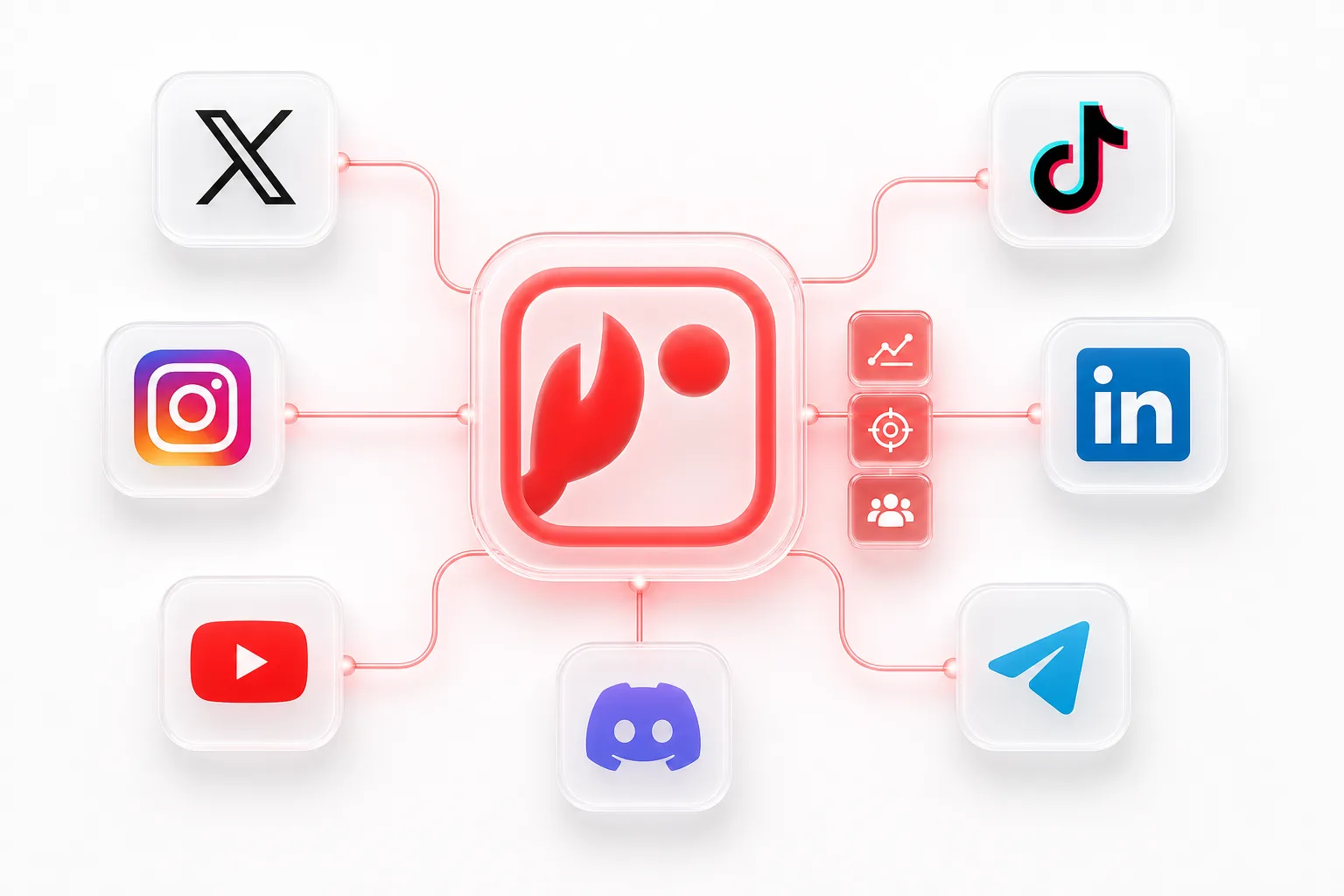
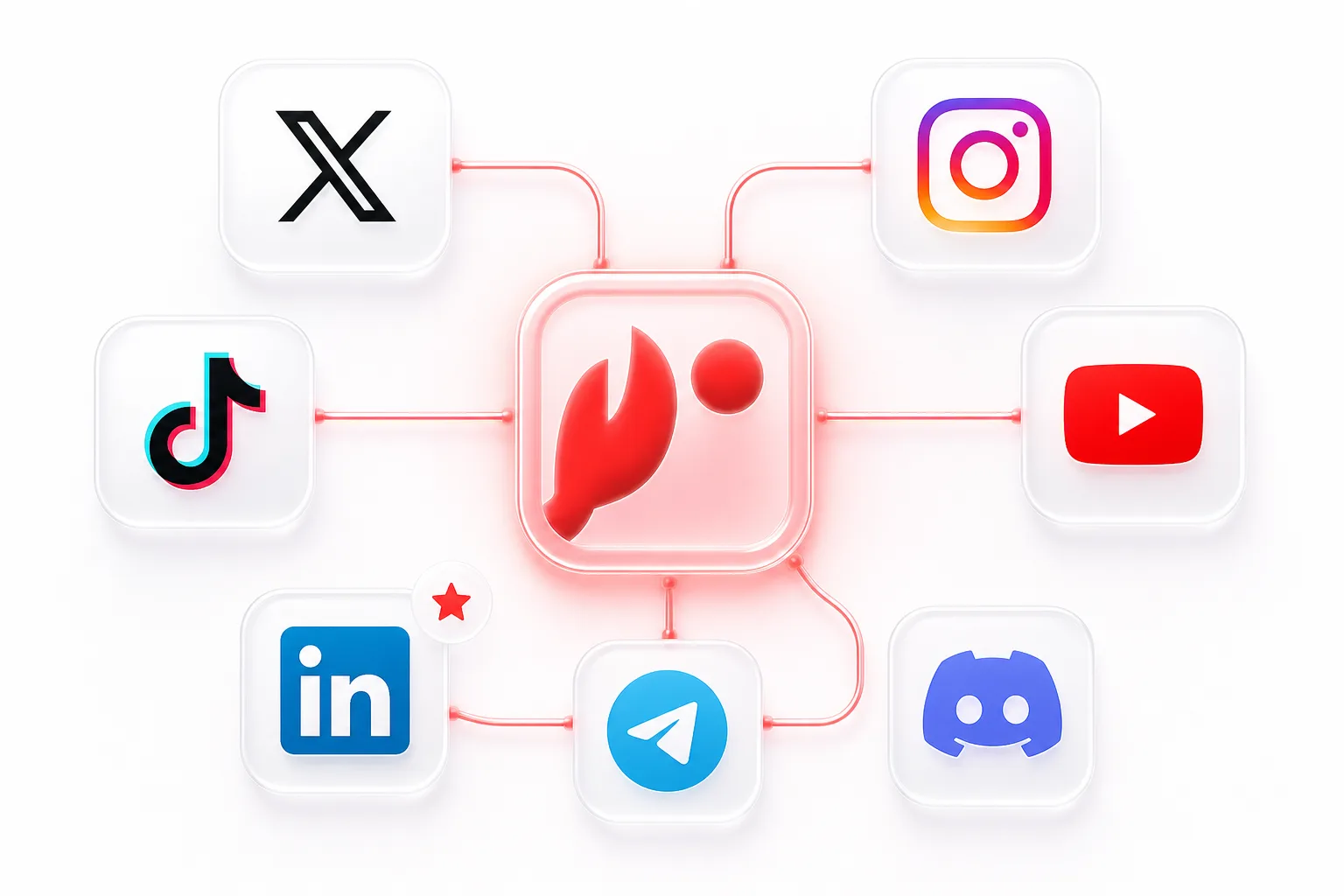
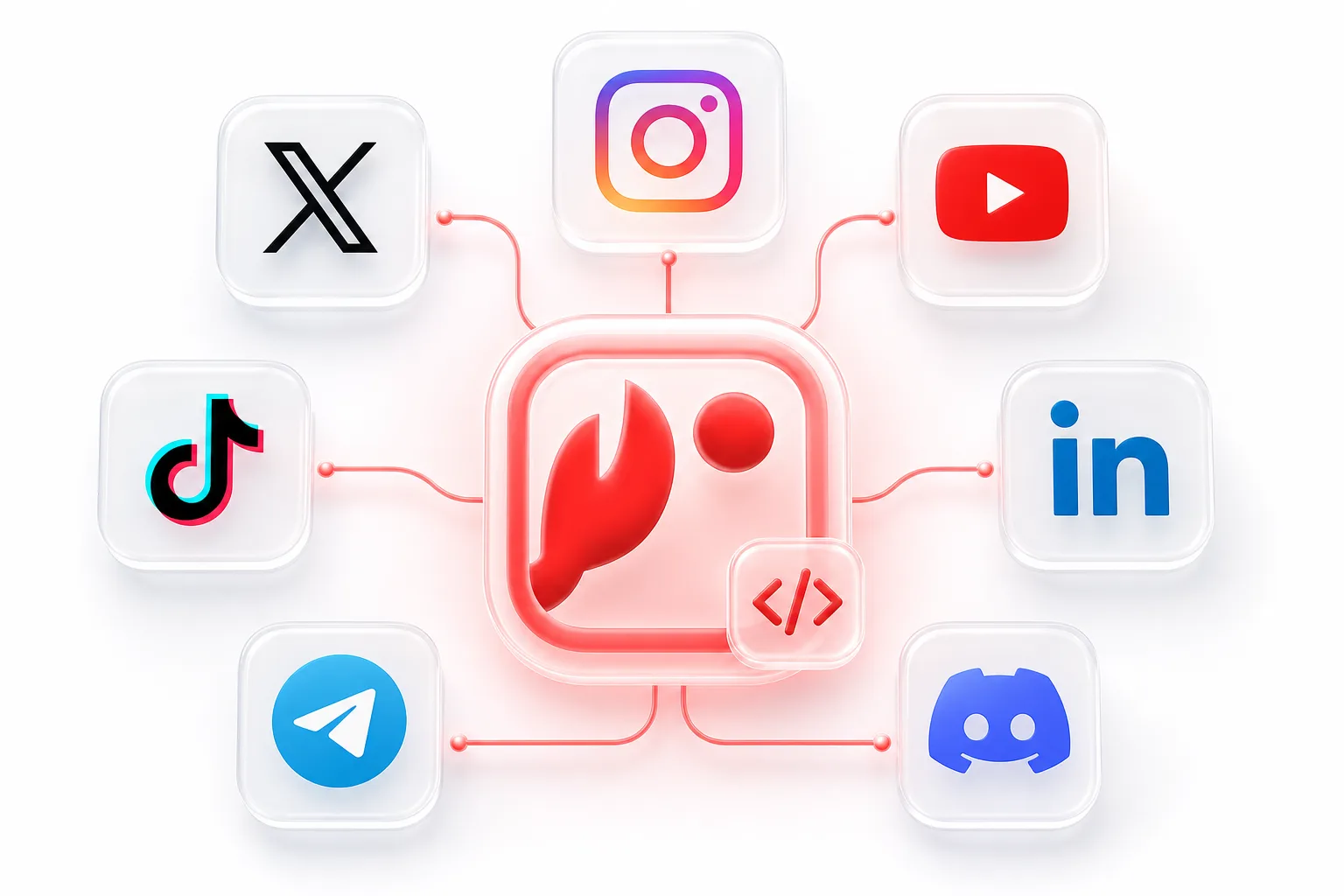
That is where SocialClaw fits. It gives OpenClaw-compatible tools the missing execution layer.

The right split between OpenClaw and SocialClaw
The cleanest mental model is simple.
OpenClaw should own:
- research
- drafting
- deciding what to post
- assembling structured payloads
SocialClaw should own the execution layer:
Account connection
Customer-owned accounts connected once inside the workspace.
Workspace API auth
One scoped key for CLI and API execution.
Hosted media handoff
Upload once, reuse stable public asset URLs.
Validate before apply
Provider-aware checks before publish.
Publish execution
Controlled apply across connected targets.
Inspection
Run and post state after the run.
That division keeps the agent focused on reasoning while the publish backend stays grounded in real connected-account state.
What SocialClaw already exposes for this workflow
The public SocialClaw surface already includes:
- the npm CLI
- the OpenClaw/ClawHub-compatible skill bundle
- hosted dashboard bootstrap through
socialclaw login - account connection flows
- asset upload
- campaign preview
- validation
- apply
- run, post, analytics, usage, and health inspection
The public repo explicitly describes itself as the home for the CLI and the agent skill bundle, with the skill folder publishable to ClawHub if you want agents to discover and use SocialClaw through a hosted skill.
Step 1: bootstrap the workspace
The first setup step is not inside the agent. It is inside the hosted workspace.
Running the CLI without an API key opens the dashboard flow:
socialclaw loginFrom there, the user can:
- sign in with Google
- connect social accounts
- create or copy a workspace API key
That workspace API key is what the agent or automation will use later.
Step 2: connect the accounts once
After the workspace exists, connect the accounts you actually want the agent to publish to.
Examples from the first-party CLI references:
socialclaw accounts connect --provider linkedin_page --open
socialclaw accounts connect --provider x --open
socialclaw accounts connect --provider discord --webhook-url <discord-webhook-url> --json
socialclaw accounts connect --provider telegram --bot-token <bot-token> --chat-id @yourchannel --json
That "connect once" step is the core of the whole workflow. OpenClaw should not be redoing account setup for every publish run.
Step 3: make the skill or CLI available to the agent
SocialClaw supports two practical surfaces for OpenClaw-style workflows:
- direct CLI usage from scripts or terminal-driven agents
- the OpenClaw-compatible skill bundle published through ClawHub
The public repo keeps that skill bundle under the skill/ directory and explicitly says it can be published to ClawHub.
That gives you a stable integration choice:
- use the CLI when your agent can call terminal commands directly
- use the skill when your OpenClaw stack expects a hosted skill surface
Either way, both point to the same hosted SocialClaw workspace.
Step 4: use SocialClaw as the publish backend
Once the workspace and skill path exist, the day-to-day workflow is straightforward.
The agent can:
- draft the content
- inspect the connected account capabilities
- upload media if needed
- validate the final schedule
- apply the run
- inspect status afterward
A minimal CLI path looks like this:
socialclaw accounts list --json
socialclaw accounts capabilities --account-id <account-id> --json
socialclaw assets upload --file ./launch.png --json
socialclaw validate -f schedule.json --json
socialclaw apply -f schedule.json --json
socialclaw status --run-id <run-id> --json
That is a much cleaner approach than treating the agent like it should directly own every provider-specific rule.
A good first OpenClaw publishing workflow
If you want one practical first use case, start with a simple multi-channel launch update:
- X for a short text-plus-image post
- LinkedIn page for a longer announcement
- Discord for a notification to the community
The workflow looks like this:
- OpenClaw drafts the content and channel variants.
- SocialClaw holds the connected X, LinkedIn page, and Discord targets in the same workspace.
- The image is uploaded once through SocialClaw and reused in the publish payload.
- The schedule is validated before anything goes live.
- The run is applied only after validation succeeds.
- The operator inspects the result through run and post state.
This is exactly why SocialClaw works well as an OpenClaw execution layer. The agent does not need to guess how the publish backend behaves. It can rely on a stable workflow.
Add review without killing automation
One common mistake is assuming that AI publishing must be either fully manual or fully autonomous.
In practice, a much better workflow is:
- let the agent draft the content
- preview the campaign or schedule
- validate the final payload
- keep a human approval step where the team wants it
- apply only after review is complete
That keeps the speed of agent workflows without turning publishing into a blind one-shot action.
Common mistakes to avoid
The biggest implementation mistakes are predictable:
- reconnecting accounts for every run
- skipping capability inspection
- sending external media URLs without a stable hosted handoff
- publishing before validation
- assuming every provider accepts the same content shape
SocialClaw's current product truth is explicit about provider differences. For example:
- Instagram requires media
- X supports text publishing and scheduled posts with up to four images or one video
- Discord and Telegram currently support text-only or one image or one video
That is exactly why the publish layer should be structured and inspectable.
Final takeaway
OpenClaw can already be the planning brain.
What it needs for reliable social publishing is an execution backend that can hold the real workspace state: connected accounts, hosted media, validation, apply, and inspection.
That is the role SocialClaw fills.
Next steps: