























The best social automation is the kind that runs off things you already do. You publish a blog post, cut a release, add a product — and the social posts happen, formatted per platform, without anyone opening a scheduler. Zapier is the fastest way for a non-developer to build exactly that.
The naive version — trigger → "create post" action with the same text everywhere — is also why so much auto-posted content reads like a bot wrote it. The 2026 version inserts two things the naive version lacks: an AI step that reformats the source content for each platform, and a publishing backend that validates posts against platform rules and verifies delivery.
This guide builds that Zap. One thing to know up front: SocialClaw has no official Zapier app today — the pattern below uses Zapier's built-in Webhooks step to call the hosted API directly. That's five minutes of one-time configuration, and it's the same pattern you'd use for any API from Zapier.
Nardi Braho - July 4, 2026
TL;DR: Trigger (RSS / GitHub / Shopify / Sheets) → AI step drafts one caption per platform → Webhooks by Zapier POSTs to SocialClaw's validate endpoint → filter on the result → second Webhooks step applies the schedule. Accounts connect once via OAuth at getsocialclaw.com; Zapier holds only your workspace API key.
What can you trigger auto-posting from?
Anything Zapier can see. The triggers that earn their keep:
| Trigger (Zapier app) | Auto-posts when… | Good for |
|---|---|---|
| RSS by Zapier | A new blog post publishes | Content marketing on autopilot |
| GitHub | A release/tag ships | Build-in-public, dev tools |
| Shopify / Stripe | A product or price goes live | E-commerce launches |
| Google Sheets | A row is added to a content sheet | Editorial calendars, teams |
| YouTube | A new video uploads | Cross-promoting to X/LinkedIn/Discord |
| Schedule by Zapier | A timer fires | Weekly digests, recurring formats |
The sheet trigger is underrated: writers drop a topic and link into a row, and the pipeline handles drafting, validation, and scheduling from there.
How do you build the Zap, step by step?
Step 0 — one-time setup outside Zapier. Create a SocialClaw account (free tier), connect your social accounts via OAuth in the dashboard — X, LinkedIn, Instagram professional, Facebook Pages, TikTok, Discord, Telegram, YouTube, Reddit, WordPress, Pinterest — and copy your workspace API key (sc_live_...). Zapier never touches your social logins; it only carries this one key.
Step 1 — trigger. Say RSS by Zapier, pointed at your blog feed. New item → the Zap runs with title, link, and description.
Step 2 — AI formatting step. Add Zapier's AI step (or a ChatGPT/Claude action) with a prompt that forces per-platform output:
You write social posts for [your brand]. From this blog post, return JSON:
- "x": max 260 characters, one clear idea, link at the end, no hashtag pile
- "linkedin": 3 short paragraphs, insight-first, link at the end

Title: {{title}}
Link: {{link}}
Summary: {{description}}
This step is what separates the result from link-spam: each platform gets a post shaped for it, not a broadcast.
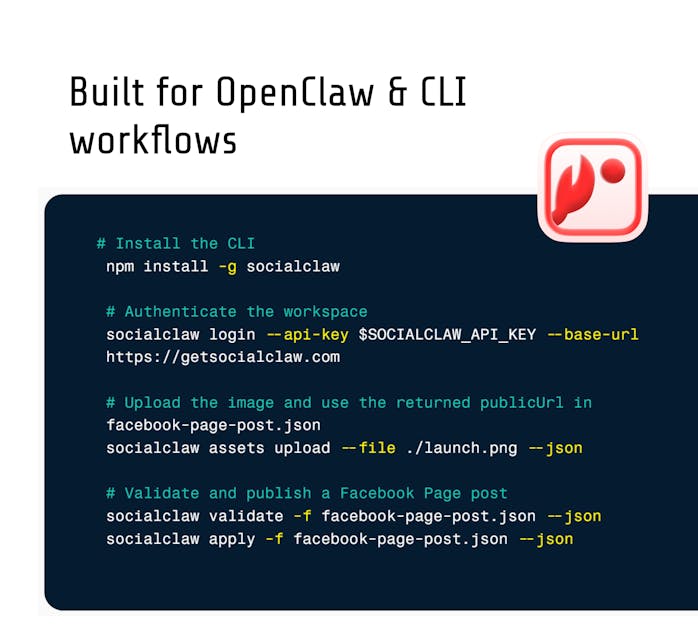
Step 3 — validate via Webhooks by Zapier. Add a Webhooks by Zapier → Custom Request action: method POST, the validation endpoint from the API docs at getsocialclaw.com/docs/api, header Authorization: Bearer sc_live_your_key, and a JSON body containing the drafted posts, target account IDs, and scheduled time. The response says whether every post passes each platform's rules before anything is queued.
Step 4 — filter. Add a Filter step: continue only if validation succeeded. On failure, branch to a Slack/email notification carrying the validation errors. Broken drafts become a ping, not a public post.
Step 5 — apply. A second Webhooks step POSTs the same payload to the apply endpoint. Scheduled. Optionally add a Delay step plus a third webhook call to the run-status endpoint to confirm actual delivery — platforms can accept a post and still fail it in processing, and this check is how you find out from a notification instead of a customer.
Why not just use Zapier's native social media actions?
For a single platform with text-only posts, they're fine. The webhooks-to-API pattern earns its setup cost when you hit any of these:
- Fan-out: one trigger → eleven platforms means one webhook call, not eleven action steps eating your task quota.
- Media: upload an image once via the asset endpoint, get a hosted URL, reuse it across every platform in the same schedule.
- Validation: native actions post whatever they're given; the validate-then-apply gate catches character overflows, missing media (Instagram requires media on every post), and format rules (TikTok photos reject PNGs — SocialClaw auto-converts via
?format=jpeg). - Verification:
run_statusandpost_attemptsexist; "the Zap ran" doesn't mean "the post published."
If you're weighing this pattern against giving an AI assistant direct tools or writing real code, the decision framework is in MCP vs API vs Zapier.
Zapier MCP: the same bridge, pointed the other way
Worth knowing even though it's the inverse of this guide: Zapier also ships an official MCP server (zapier.com/mcp) that lets AI assistants like Claude call Zapier's app actions as tools. This guide's direction is event → Zapier → publishing API; Zapier MCP's direction is AI assistant → Zapier → apps. If your starting point is "I chat with Claude and want it to reach my other tools," that route — alongside a publishing MCP server from our ranked list — may fit better than building Zaps at all.
FAQs
Is there an official SocialClaw Zapier app?
No — not currently. The supported pattern is Webhooks by Zapier calling the hosted API with your workspace API key, exactly as described above. It's one-time configuration rather than a one-click install, and it exposes the full API surface (validation, media, verification) that packaged Zapier apps typically trim.
Which Zapier plan do I need?
Webhooks by Zapier is a premium built-in app, so this pattern needs a paid Zapier plan. Note the task math favors it anyway: one webhook call publishing to five platforms consumes fewer tasks than five native action steps.
Can the AI step really match my brand voice?
Close enough for scheduled content if you invest in the prompt: include two or three example posts you actually published, name the audience, and state what to avoid (hashtag walls, emoji strings, hype adjectives). For higher-stakes posts, have the Zap write results to a review sheet and let a human trigger the apply step.
What about Instagram and TikTok specifically?
Both work with caveats worth knowing: Instagram must be a professional (business/creator) account — Meta's rule, not the tool's — and requires media on every post; TikTok photo posts accept JPEG/WebP only. The validation step surfaces both problems before publish instead of after.
How is this different from doing it in n8n or Make?
Same architecture, different orchestrator: trigger → AI step → validate → apply → verify. n8n gives self-hosting and more control (n8n guide); Make sits in between (Make.com guide); Zapier has the shallowest learning curve and the broadest trigger catalog.
Does auto-posting hurt engagement?
Lazy auto-posting does — identical text everywhere, no judgment about what's worth sharing. The AI formatting step fixes the first problem; adding a relevance filter ("is this update worth posting? if not, stop") fixes the second. Automate the mechanics, keep taste in the prompt.